

Enhanced – Listen: to the audio article
Text reading "in-Formed A COLUMN ON SPIRITUAL FORMATION". Features a script font for "in" overlaid on a yellow sun with radiating rays, with four small birds flying in the upper right against a white background.

Being shaped by Jesus from the inside out

Matthew 6:10

by Kay Chance

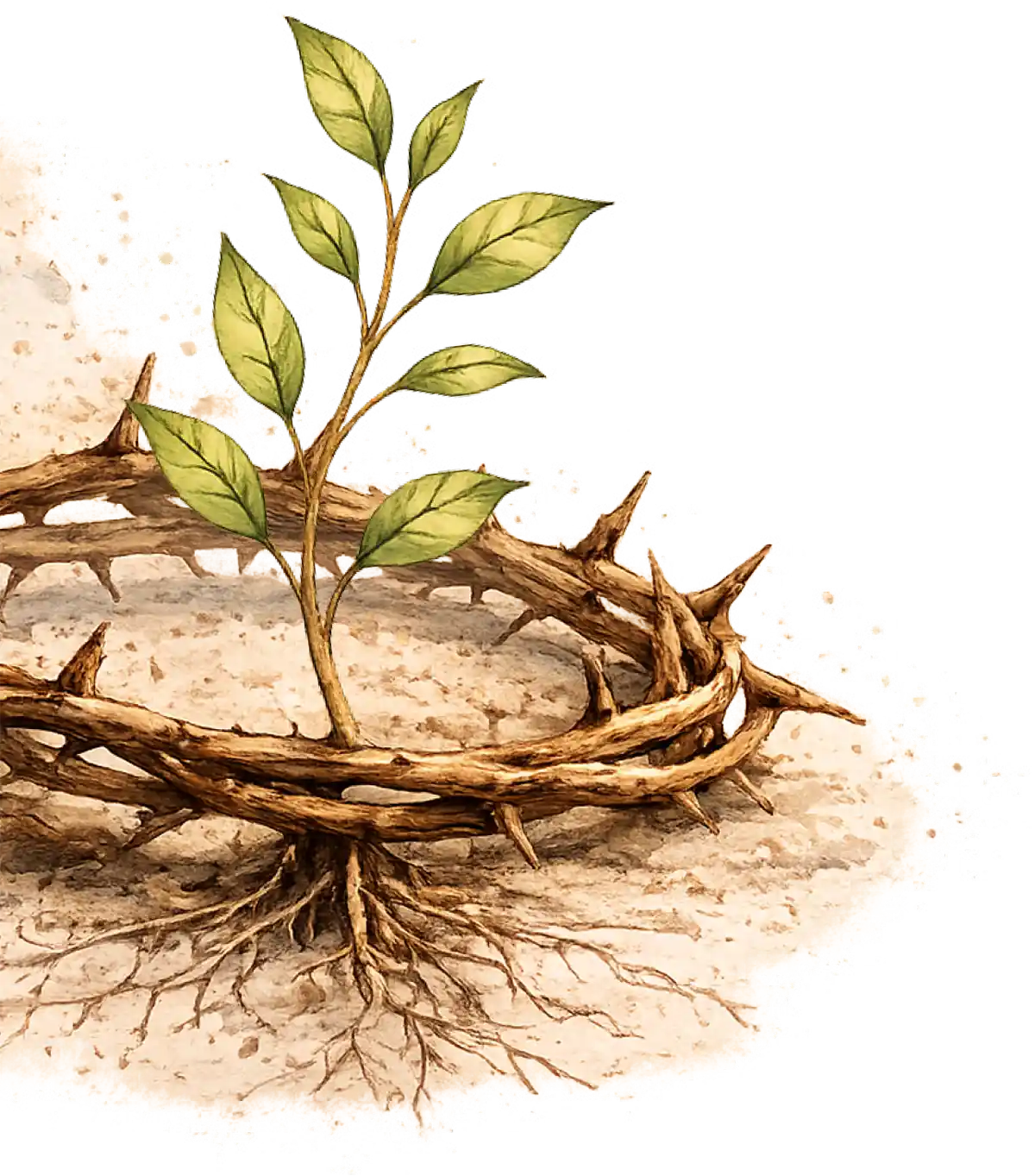
An illustration of a crown of thorns resting on a sandy patch with a small green leafy plant growing upward from its roots.
Formed by Story
“Once upon a time, in a kingdom far away…”
As

  children, we were hooked. Even children who cannot read yet, or those who don’t enjoy reading, want to listen to stories. How often have your children asked you to read them a book before bedtime? How often do they want to hear their favorites over and over again?

God designed us this way. Stories shape us and help us make sense of the world. They instruct, inform, grow, and entertain. They can warn or encourage us. Stories are powerful; narratives form our character, our beliefs, and ultimately our actions. We read them and hear them and unconsciously absorb them. They are powerful.


Some stories are true, while others are not—even fiction can contain truth—and yet they all impact us. The narratives we take from stories—shaped by how they are told and how we perceive them—can be everything from life-giving to soul-crushing. That is why the stories we consume matter. The narratives we tell our children matter. Confronting the hard truth in stories and discarding the false ones matters.
A father sitting on the floor reading a book aloud to his smiling wife and two children gathered on the sofa in a cozy living room

“The stories we are told and tell ourselves become a filter through which we view our life and the lives of others.”

The Stories We Are Told
We constantly hear stories and build our own narratives, whether we realize it or not. I want you to think about the stories you have heard and the narratives you believe, so you can consider the ones your children are hearing and believing as well.
The Story Our Parents Tell Us
Beyond the books they read to their children, parents construct narratives that children pick up subconsciously. Based on the “story” they are told, children begin to believe certain things about God, themselves, and the world around them. It might be anything from “You have to perform and achieve to be accepted and liked,” to “You are beloved and unique; God wants to use your special talents and gifts because He created you this way.”

Take some time to stop and think about the narratives you grew up with in your own childhood. What stories were true and aligned with the gospel of Jesus? What stories were not true, or aligned more with the world’s way of thinking? Do some of these stories still influence the way you think and act today, whether they were positive or negative?

The Story We Tell Ourselves
Often based on the story we embraced from our family, we begin to tell ourselves one. I grew up thinking that I had to be a “good” girl to be loved. And when I say this, I want to emphasize that my parents never intended to tell me this story. Other factors come into play as well, but the one we perceive from our parents carries a lot of weight. Somehow, I started living with a “checklist spirituality.” If I read my Bible, prayed, went to church, etc., then I was a good Christian. If I got straight A’s on my report card, then I was a smart, good student. You get the picture. Deep down, I believed my worth came from what I did and not who I was. I even unconsciously believed that God thought so too. I could intellectually affirm that He loved me, and yet my thoughts and actions showed what I really believed: I needed to earn his love by being good.

What story do you tell yourself? How has it affected the way you interact with others? How has the story either helped or hurt you? Is it a true story or not? What story do you want your kids to tell themselves?

A watercolor landscape illustration of three wooden crosses standing atop a hilltop at sunrise, with an ancient walled city visible in the background.

“How we parent will tell a story to our children.”

The Story Our Culture Tells Us
People all over the world grow up in cultures that value different things. There are guilt/innocence cultures, shame/honor cultures, and fear/power cultures. Some cultures emphasize family and community while others glorify individualism. The list goes on to include views about sexuality, how nations should be governed, and even what and how we eat.

Try to be as objective as possible and list the values of the culture you grew up with and live in now—which will even differ among cities, towns, and states within the U.S. What story is your culture telling you? How have the values of your culture informed your own values? What values do you embrace and which ones do you shun?
A lit brass lantern set against a faded, sepia-toned illustration of a countryside landscape with a dirt road and rolling hills.
The Story the Bible Tells Us
Now that you’ve considered the stories you heard or perceived from your parents, yourself, and your culture, hear the compelling story the Bible tells about you.

You are created in the image of God. The first man and woman, Adam and Eve, chose to do what God had commanded them not to do—they ate from the tree of the knowledge of good and evil, thus choosing to follow their own wisdom and desires instead of God’s. Since then, we keep making this choice and miss the mark of God’s righteousness. This is called sin, and just as God had told Adam and Eve, the wage of sin is death… of separation from God. But there is good news! God so loved the world, God so loved you, that he gave his only son, that when you believe in him you won’t die, but have eternal life. Jesus said he came to give you this life, and give it to the full. He came to give you a with-God life, one that starts when you believe, when you put your trust in him and what he has done for you. You have a purpose: as a follower of Christ, you get to help bring the beautiful kingdom of God to a broken world. You get to be a light to those around you. And you get to spend eternity with God!

What a beautiful true story. I hope it is the story you heard. If not, stop now and spend some time with the Father who loves you unconditionally. Let his Spirit whisper the truth to your soul. God created you in his image; he loves you, and he wants to give you a purpose so much bigger than you could come up with on your own. You are his beloved whom he has redeemed.

Reframing the Story
We need to ask ourselves, “What stories have we believed that need to be rewritten?” Why? Because the stories we are told and tell ourselves become a filter through which we view our life and the lives of others. How we heard the gospel impacts how we live out our faith. How we parent will tell a story to our children. And stories come in many other forms than the ones that we have looked at so far. The narratives we believe also come from the books we read, media we consume, and the communities we build. Let us choose wisely!

If you have believed a false story, one of the most healing things you can do is share your story within a loving community. God designed us to live in community, and we often don’t take into account just how important that is. Once we have told our story, it becomes possible to rewrite, or reframe, it.
I thought I had to achieve, to do something to be loved. I’m glad that God has shown me the truth. He loves me simply for being. When I focused on “doing,” it became easy to focus on myself and be full of certitude and pride. But God is a God of redemption. He’s helping me to understand the depth of his love, and now, as I focus on that instead of myself, I can let that love flow through me to others. I have a purpose because my life with God started the moment I believed. My prayer is his: Your kingdom come, your will be done… what a gift to participate in the beauty of a story so much grander than me.
Kay Chance headshot
K

ay Chance homeschooled her children for fifteen years. While teaching them, she discovered a passion for writing and developing curriculum resources. She loves sharing natural learning methods and creative lesson ideas with other homeschooling parents. Kay is the co-executive editor of Homeschooling Today magazine and the author of the older extensions for the Trail Guide to Learning series. She makes her home in Texas with her husband Brian.