

Practical Support Tools
by Michelle Brownell
“What if sibling conflict isn’t a problem to prevent, but a skill to develop in them?”
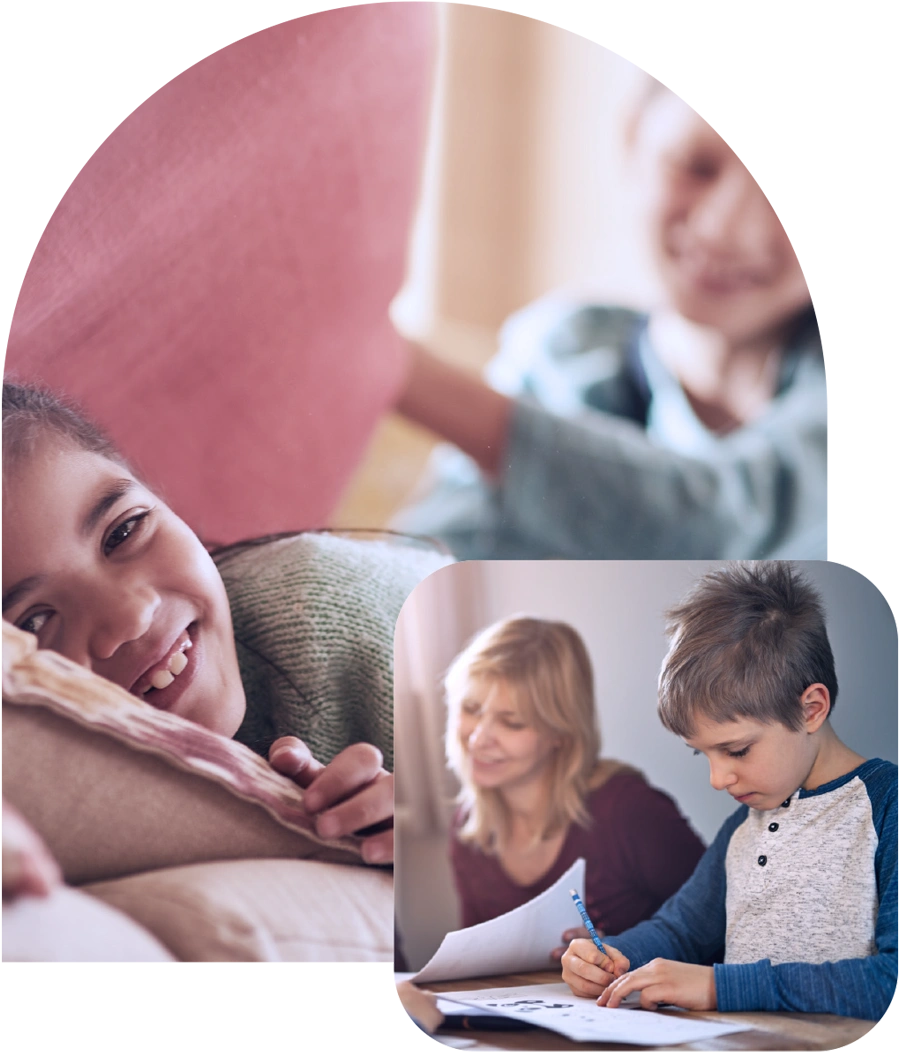
Collage of two photos: a smiling girl resting on a cushion with a blurred child behind her, and a young boy writing on paper at a table while a woman looks on.
When kids fight | Helping Kids Navigate Resolution

I just wanted to get through the read-aloud…

O

ne chapter. Fifteen minutes. But before I finished the first page, it started. My son had claimed the spot on the couch his sister wanted. She bumped him. He grabbed the book. And there it was. Another argument before we even got started.

This was not the homeschool I imagined. I had a picture in my head of what it was going to look like: Cozy mornings, kids leaning in together, learning side by side. Not refereeing a couch cushion dispute at 9 AM. If you’ve been there, you know that feeling. And when your kids are together all day, learning together, eating together, existing in the same space from morning to night, there are a lot of opportunities for these types of things to show up.

But those moments aren’t getting in the way of your homeschool. They might be some of the most important work happening in it. What if sibling conflict isn’t a problem to prevent, but a skill to develop in them? What if those hard moments are less of an interruption and more of an invitation to teach something that will serve your children for the rest of their lives?
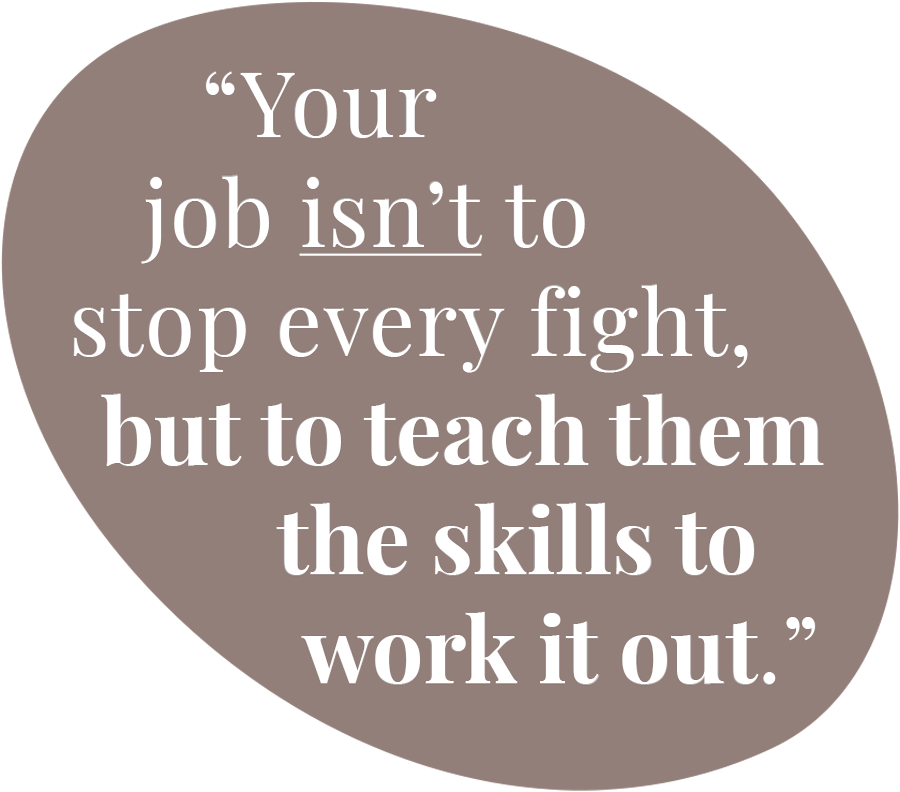
“Your job isn’t to stop every fight, but to teach them the skills to work it out.”

Why
Siblings Fight

Your children are fighting because they’re human, they’re young, and they’re still learning skills that most adults are still working on, too. They are learning to consider someone else’s feelings, to wait their turn, and to share space, belongings, and your attention. These developmental skills take time, repetition, and a lot of patient guidance from you. Your children are learning, in real time, what it means to live in relationship with another person.

In a traditional school setting, siblings get a break from each other. In your home, they don’t. One of the genuine gifts of homeschooling is cultivating deep sibling bonds that form through shared days and shared experiences, but it also means the friction has more room to show up too.

Your Role Isn’t Referee
It’s Guide
When our kids fight, our instinct is to come in as a referee and stop it. But when stopping the fight is the goal, we miss what the fight is offering. It’s a real opportunity to teach the skills that make getting along possible in the first place.
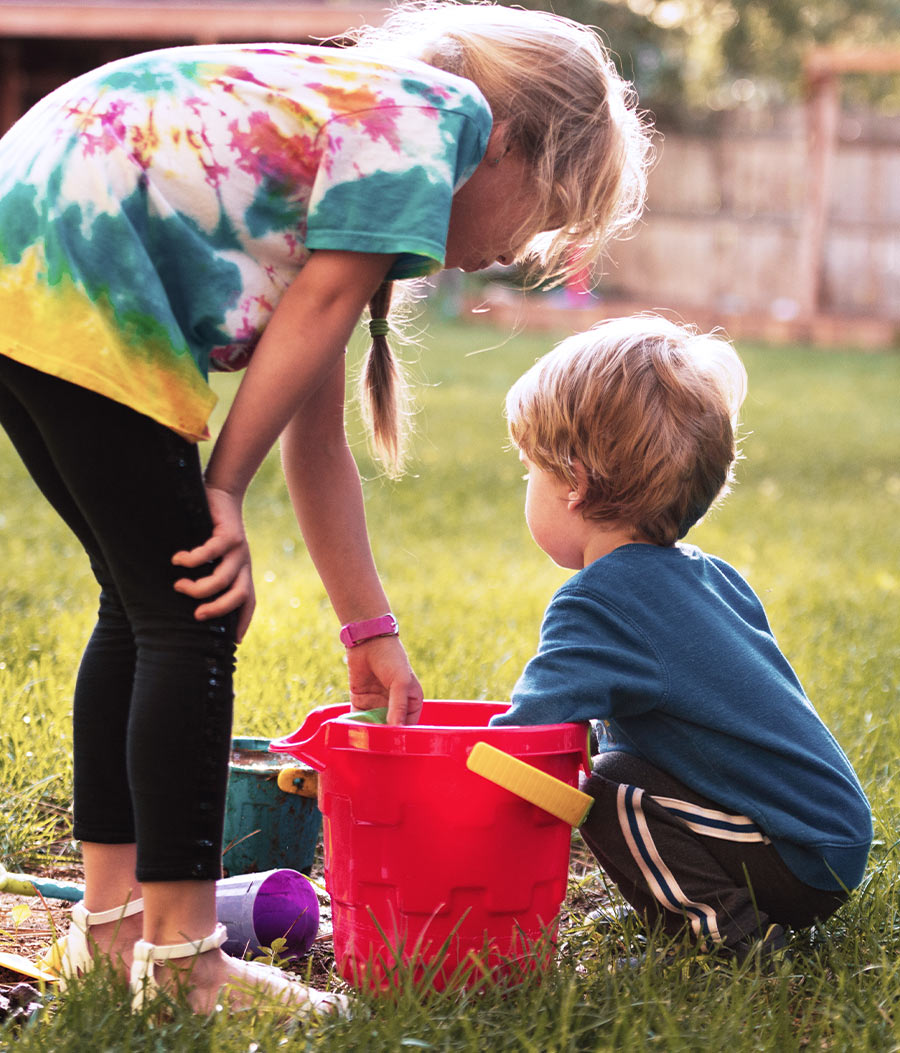
A young girl in a tie-dye shirt stands on a grassy lawn, leaning down toward a young boy who is crouching next to a large red plastic bucket.
Your job isn’t to stop every fight, but to teach them the skills to work it out. And it starts with you. You cannot guide your children through big emotions while you’re in the middle of your own. A single breath before you walk through the door, a quiet reminder to yourself: I’m here to help them, not to fix them is often the difference between a moment that escalates and one that moves somewhere. Proverbs puts it simply: “A gentle answer turns away wrath.” When we regulate ourselves first, we give our children someone to co-regulate with.

Sibling conflict is not an interruption to your homeschool day, it’s an important part of it. You are teaching your children how to express what they need without tearing someone else down, how to hear a different perspective, how to repair what breaks. These are not soft skills at the edges of your curriculum. They are essential skills for life and for learning. You can stop asking “Why do my kids fight so much?” and start asking, “What do they need to learn, and how can I help them learn it?”

When They Fight
What To Do in the Moment

Let’s start by rethinking one word: fair. Fair doesn’t mean equal. Fair means meeting each person’s needs. And your children are not the same person. They have different temperaments, different sensitivities, different ways of feeling heard. Walking in and treating them identically isn’t fairness, it’s just efficiency—and it usually leaves both feeling like you missed the point entirely.

The how matters just as much as the mindset. This is where the work of researchers like Dr. Laura Markham has shaped how I handle these moments. Before anything else, take a breath. Come in calmly. Your tone sets the temperature in the room. Then get down to their level, make eye contact, and put a hand on a shoulder. Connect before you correct. You’re signaling to each child: I’m here. I see you. We’re going to work through this together.

Step 1: Acknowledge both realities.

“I hear you saying your brother took something that was yours. And I hear you saying you didn’t realize she was still using it.” Both things can be true. When each child feels genuinely heard, the tension drops.

Step 2: Help them speak to each other, not at each other.

Coach their words. “Can you ask her, ‘When you’re done with that, may I have a turn’?” You’re showing them how to use their own words more effectively.

Step 3: Hold the standard without shaming.

“That’s not how we talk to each other here. Let’s try again.” Clear, calm, consistent. No lecture needed.
The goal isn’t that someone wins. It’s that both children walk away feeling heard and having practiced, even imperfectly, working through something together.
What makes those moments go better is what you build in between them.

Habit 1: Invest in one-on-one time with each child.

So much sibling conflict is driven by scarcity and the feeling she always gets more, nobody cares what I need. That mentality loses its grip when each child regularly experiences your individual attention.

Habit 2: Emotion coach daily.

Feelings that don’t get named go underground and come out sideways, usually at a sibling. When you help your children process emotions regularly, not just mid-blowup, you reduce the pressure that builds into conflict.

Habit 3: Protect their positive time together.
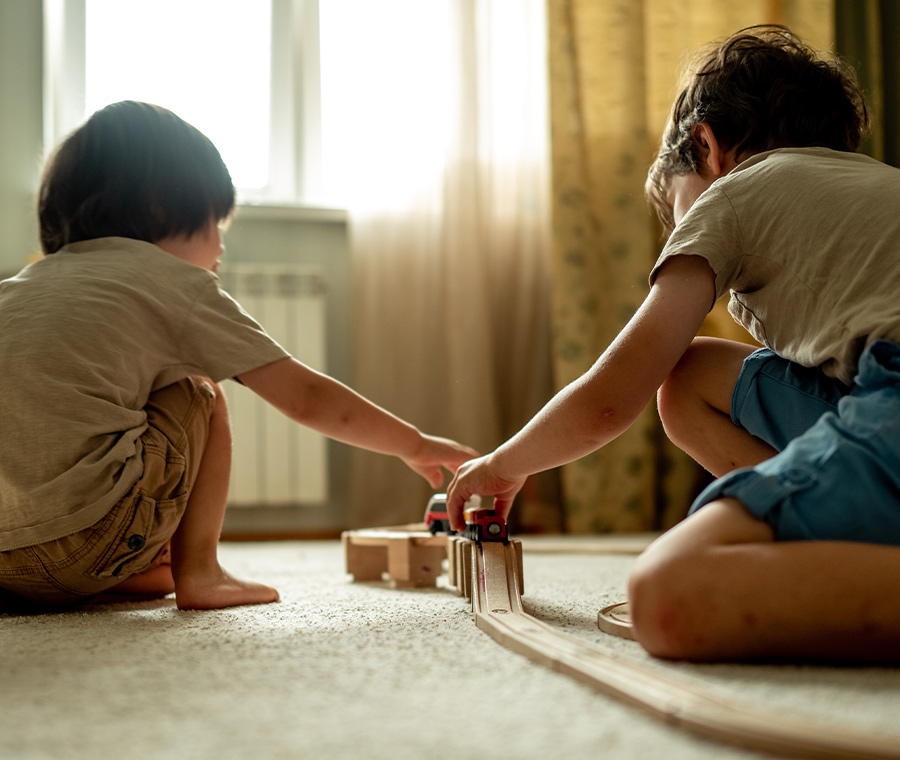
Fun together strengthens the bond that carries them through the hard moments. When they’re playing well, don’t interrupt, not even for a math lesson. Those happy shared experiences are building the kind of connection that makes repair possible.
The goal isn’t a home without conflict. The goal is a home where conflict gets worked through, and kids are learning the skills they need to do it.
Two young boys crouch on a carpeted floor, playing together with a wooden toy train track assembly in front of a sunlit window.
The Skills
Being Taught
Every time you guide your children through a conflict, you’re building the skills they will carry into every relationship they’ll ever have. Your children have the opportunity to learn these things now, while the stakes are still low and you’re right there to help. That is one of the genuine privileges of the homeschool home.

Here’s what’s being built
conflict by conflict:
Empathy.
Siblings are the first and most consistent training ground for learning to see beyond yourself. It grows through practice and through being asked, again, to consider someone else’s experience.
Emotional regulation.
Learning to feel something big like anger, frustration, hurt, and not be ruled by it is one of the most important skills a person can develop.
Self-expression.
There’s a real difference between I hate you, you always do this and I was still using that, and I needed you to ask me first. Naming what you need clearly, without attacking, is a skill that will serve them in every relationship that matters.
Negotiation and compromise.
Learning that two people can both have legitimate needs, and that the goal is for both to be heard rather than one to win. That’s the foundation of every healthy relationship. Philippians 2:4 calls us to look not only to our own interests but to the interests of others. Your children are learning that now.
Repair.
Every time a conflict ends with reconciliation rather than just silence, your children learn that relationships can survive hard moments.
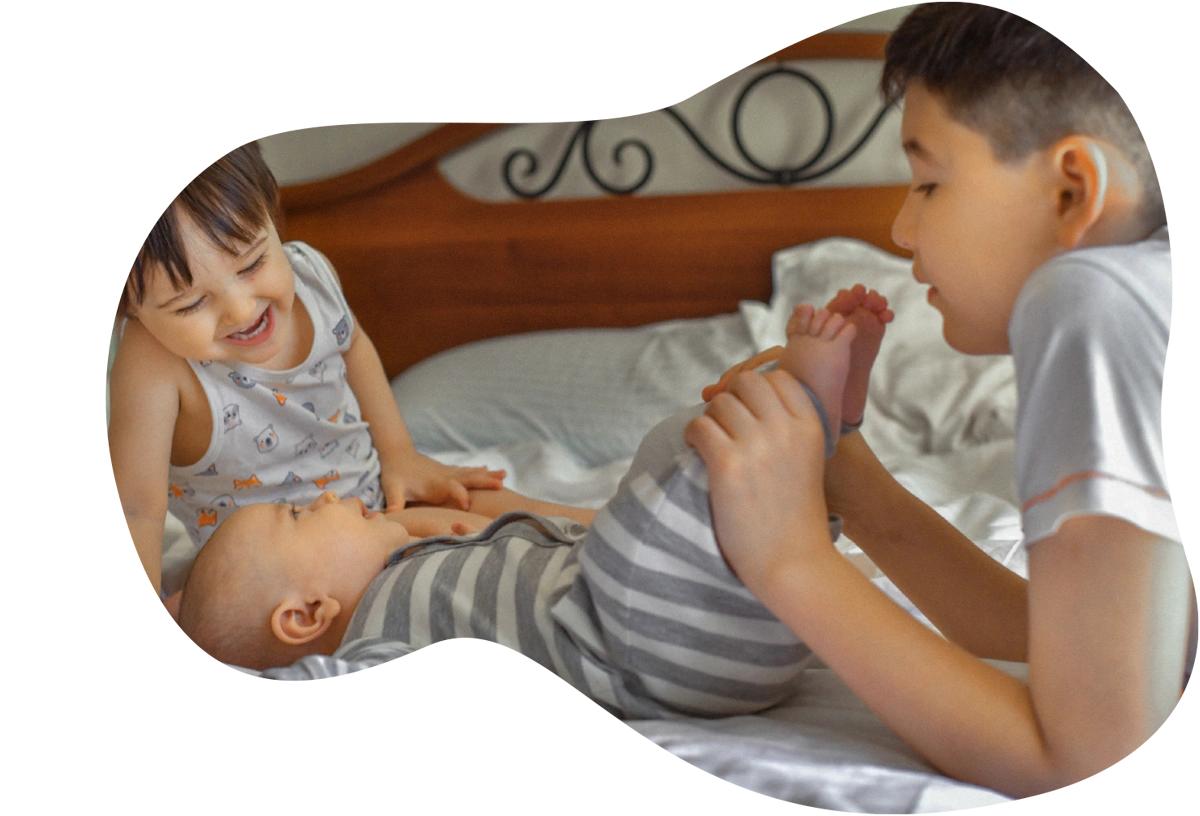
An older boy holds a baby's feet while lying on a bed next to a smiling toddler who looks down at the baby.
You’re Teaching
More Than You Know
None of this is fast work. There will be days you handle it beautifully and days you don’t. Days when everyone grows a little and days when everyone, including you, needs to apologize before dinner. That’s family. That’s the ordinary, holy work of people learning to love each other well.

You don’t have to get it perfect. You just have to keep showing up. Keep choosing to teach through it rather than just stopping it. Keep believing your children are capable of more than their worst moment, because they are, and because they need you to believe it before they can believe it themselves.

Every conflict you lean into is building something. Empathy. Self-control. The ability to disagree without destroying. The knowledge that relationships can survive hard moments. These are the skills your children will carry into marriage, every friendship, every workplace they ever enter.


That’s not a small thing. That’s the work of a lifetime, beginning in your living room on an ordinary Tuesday.
Michelle Brownell signature
Michelle Brownell headshot
M

ichelle Brownell is a seasoned parent coach with nearly 20 years of experience in education, specializing in empowering parents of children with ADHD and other learning challenges to thrive in life and learning.

Michelle and her husband Jaron have been married for 29 years. They are the founders of Homeschool Essentials, offering online courses, the Once Upon a Homeschool planner, and the Best Year Ever coaching program. Their mission is to inspire parents to raise confident, emotionally healthy children, empower them to create personalized learning experiences, and ultimately see them build amazing relationships with their kids that last a lifetime. They live in Florida with their two teens and Havanese dog, and enjoy living the seasonal RV life.