

 Enhanced – Activity: available to download


with
Kay Chance


eading aloud as a family is one of the foundational strategies for creating an atmosphere conducive to learning naturally. Simple, but effective, reading aloud provides so many more benefits than you might think. Reading aloud:
- Increases attention span
- Grows vocabulary
- Develops reading comprehension
- Models reading with expression
But maybe most importantly, it gives you the chance to build family relationships through a shared experience. In her book, For the Children’s Sake, Susan Schaeffer Macauley explains it this way:
Reading aloud, and discussing different topics that naturally come up, is a non-threatening way to talk with our kids about worthy character traits we want them, and ourselves, to develop. Just as Jesus used stories to teach his disciples, we can use stories to teach our children. For us, reading aloud was a natural way to train their character as well as their minds.
And it gave us the opportunity to appreciate the craft of writing. Compelling uses of imagery and literary devices, how good authors write natural sounding dialogue, and how they can hook readers with a great opening paragraph or leave them waiting to hear more at the end of each chapter.
Maybe you read aloud as a family for years but have slowly stopped as your kids have gotten older. Or maybe you never made it a part of your daily rhythm. I want to encourage you to try it with the novel Number the Stars by Lois Lowry. (This would be a great way to start 2025!)
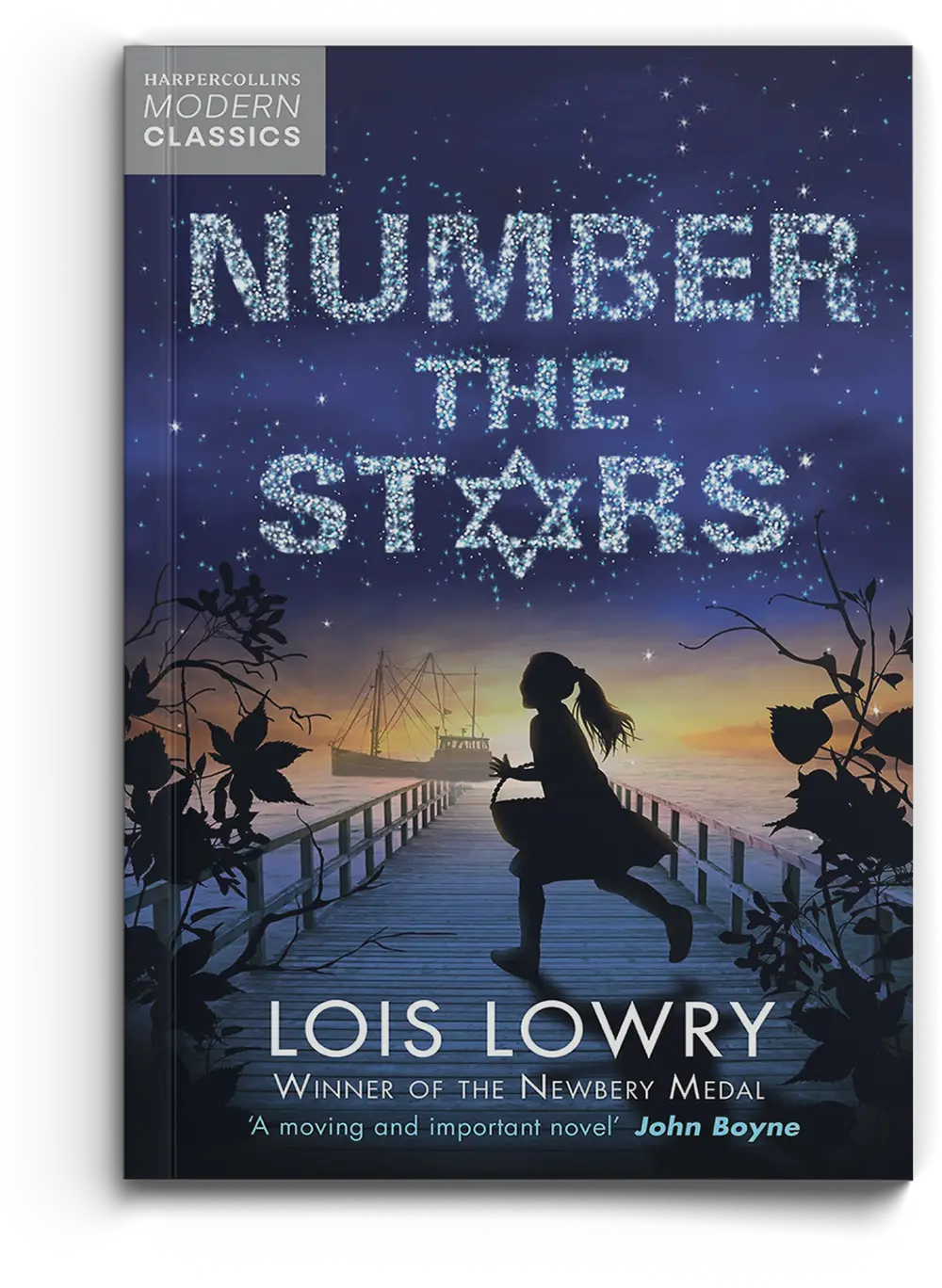
any middle schoolers learn history from more textbook-like resources, and as a result, history can seem less interesting than it did in the elementary years. That’s why we believe historical fiction is especially important at this age. It inspires, entertains, and gives readers a feel for historical times in a way a list of dates and events can never do. History really is about story! Lois Lowry’s Number the Stars is an excellent example of how historical fiction brings past events to life.
This engaging, exciting novel won the Newbery Medal in 1990. Set during the time of World War II, Number the Stars tells the story of a family hiding their daughter’s best friend as German troops begin to “relocate” the Jews of Denmark. The story is told from the viewpoint of a ten-year-old girl, making it relatable to a middle school age audience.
One of the things I absolutely love about this novel is the way the author transports us through vivid descriptions and literary language as a wonderful example of well-crafted writing.
Note: There are a few instances of a curse word being used.